Back to Blog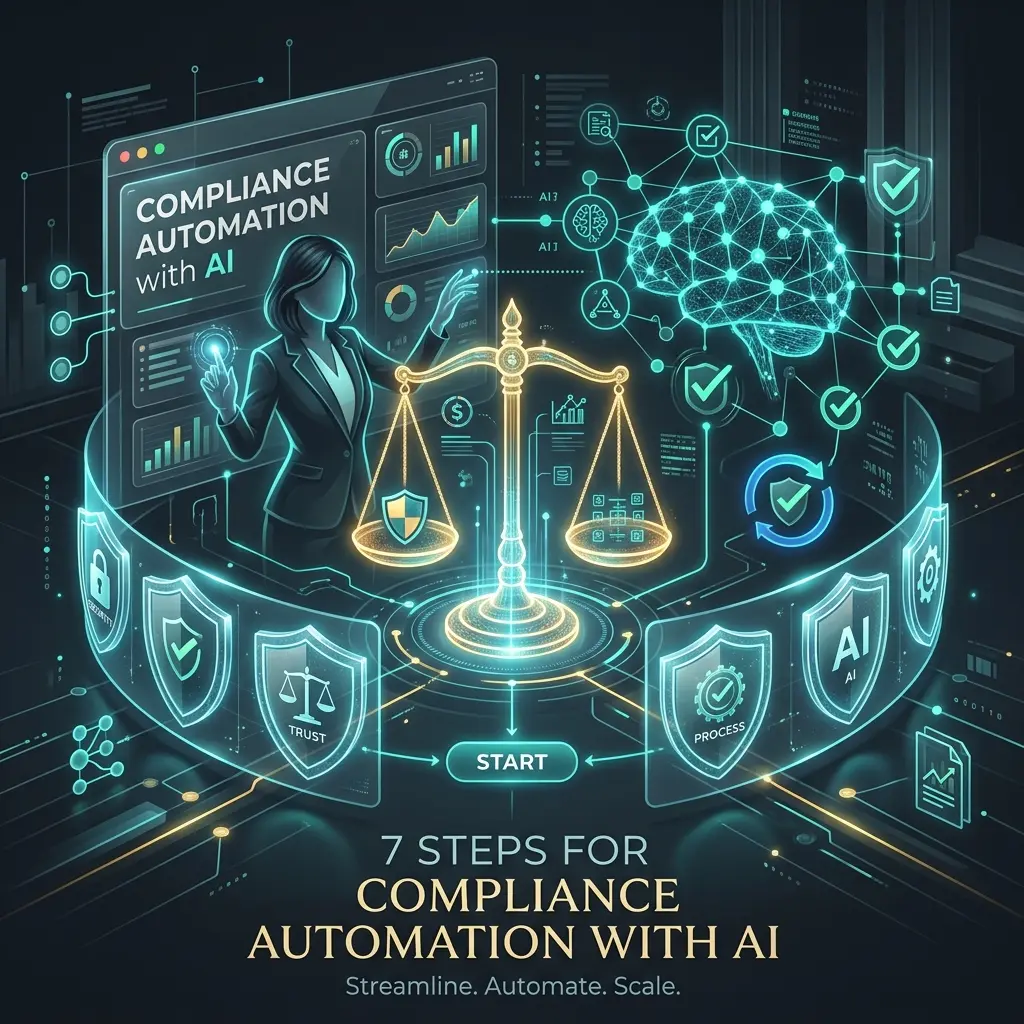
Automation
7 Steps for Compliance Automation with AI
Learn how to streamline your regulatory processes using artificial intelligence. Discover the 7 essential steps for implementing AI compliance automation.
April 29, 2026
7 min read

Nowadays, keeping up with regulations is getting harder. Manual checklists just don’t work anymore.
Rules change quickly, so businesses are using AI to stay accurate and move faster. AI helps spot risks early, before they become bigger problems.
With the right plan, compliance is no longer just a cost. It can become a strong advantage for your business.
Let’s start by understanding the need for AI compliance.
Why Transition to AI-Driven Compliance?
The shift toward AI-driven compliance is motivated by the sheer volume of data modern enterprises must manage. Manual oversight is no longer just slow; it is statistically impossible to maintain at scale.
Reduced Risk of Human Error
Human error is a big challenge in compliance. Missing a small detail, like a checkbox or an unusual data point, can lead to heavy fines.
AI helps avoid this. It can review thousands of documents with the same focus at any time of day, making sure everything meets the required standards.
Real-Time Regulatory Monitoring
In the past, making sure your company followed the law was like taking a single photo once a year during a big inspection. If things changed the day after the inspection, you wouldn't know until the following year.
Today, laws and rules change almost every week. To keep up, modern businesses use Artificial Intelligence (AI) that works like an automated 24/7 researcher.
Cost and Time Efficiency
Compliance carries a hidden cost. Highly skilled employees spend thousands of hours on repetitive documentation and data validation. Automating these low-value, high-risk tasks gives your team time back.
Organizations that implement professional services automation for compliance often cut operational costs by up to 40% in the first year. The need for large manual auditing teams drops, and the risk of non-compliance penalties falls to near zero.
Choose Flowlyn for Compliance Automation Services
At Flowlyn, we know compliance isn’t a one-size-fits-all solution. We bridge the gap between complex legal requirements and agile business operations.
Our team builds more than software. We design the architecture that keeps your data compliant across every platform you use.
By leveraging advanced automation tools like n8n and custom AI models, Flowlyn ensures that your compliance workflows are integrated, invisible, and infallible.
7 Steps to Implement Compliance Automation with AI
Step 1: Audit Your Current Compliance Workflows
Map every manual touchpoint in your compliance process.
- Who handles data privacy requests?
- How do you reconcile financial records?
- Identify bottlenecks.
These often appear where people copy data between spreadsheets. These friction points are prime candidates for AI intervention.
Step 2: Define Clear Objectives & Regulatory Scope
Define the frameworks you target. Are you addressing GDPR for privacy, HIPAA for healthcare, or SOC 2 for security?
Narrow the scope so you can choose AI models trained in those legal terms. Set clear KPIs, such as cutting SAR response time by 80%, to measure success.
Step 3: Ensure Data Cleanliness & Centralization
Scattered data causes compliance mistakes. When data is spread across different systems, AI cannot see the full picture. Bring your data into one place or connect your systems properly. Clean and complete data helps AI work accurately.
Step 4: Evaluate and Select the Right AI Tools
Compliance tools need strong NLP to read contracts and anomaly detection to spot fraud. Security is paramount. Choose tools with end-to-end encryption that meet the regulations you aim to automate. Look for platforms that integrate with your stack through tools like n8n or Make.
Step 5: Start with a Small Proof-of-Concept (PoC)
Avoid the urge to automate everything at once. Choose one high-volume, low-complexity task, such as vendor risk assessment or employee policy acknowledgments, and run a proof of concept. This step helps you test the AI in a controlled setting.Once it proves value and accuracy, expand the rollout.
Step 6: Train Your Team on the New Systems
Automation can create fear of job loss. Address this early. Train compliance officers to act as AI supervisors instead of data gatherers. Show them how to read AI flags and use the dashboard for strategic audits. Their judgment still matters for final decisions.
Step 7: Monitor, Audit, and Optimize the AI
AI needs regular checks. Business changes and new data can affect performance. Run a quarterly audit where experts review a sample of AI decisions. This keeps the system accurate and aligned with current laws.
Common Challenges When Automating Compliance
Handling Data Privacy Concerns
The irony of compliance automation is that the AI often needs access to sensitive data to protect it. To fix this, utilize Privacy by Design principles. Implement data masking and anonymization so the AI can analyze patterns without ever seeing personally identifiable information (PII).
Overcoming "Black Box" AI Apprehension
Regulators don’t trust AI if it can’t explain its decisions.
To fix this, use tools that show why a flag was raised, including the rule or data behind it. This makes your process clear and helps you justify your actions during audits.
Frequently Asked Questions
Can AI completely replace human compliance officers?
No. AI supports the process but does not replace humans. It handles most of the data work, while people make the final decisions.
How long does it take to implement AI compliance software?
A basic setup can take 4 to 6 weeks. Full implementation usually takes 3 to 6 months, depending on complexity.
Is AI compliance automation secure?
Yes, when built properly. It reduces human error and keeps a clear record of all actions, making audits easier.
Conclusion
Transitioning to AI-driven compliance is a strategic journey that begins with a single, well-planned step. By following this 7-step framework, you can protect your brand, empower your team, and stay ahead of a rapidly changing world.
Ready to secure your future? Contact Flowlyn today to book a custom compliance automation demo and start your journey toward zero-risk operations.

About Divyesh Savaliya
Divyesh leads Flowlyn with 12+ years of experience designing AI-driven automation systems for global teams.
In This Article
![Real Estate Chatbot - Benefits & Use Cases [Examples]](/_next/image?url=%2Fimages%2Fblog%2Freal-estate-chatbot%2Freal-estate-chatbot-benefix-use-cases.webp&w=3840&q=75)