Back to Blog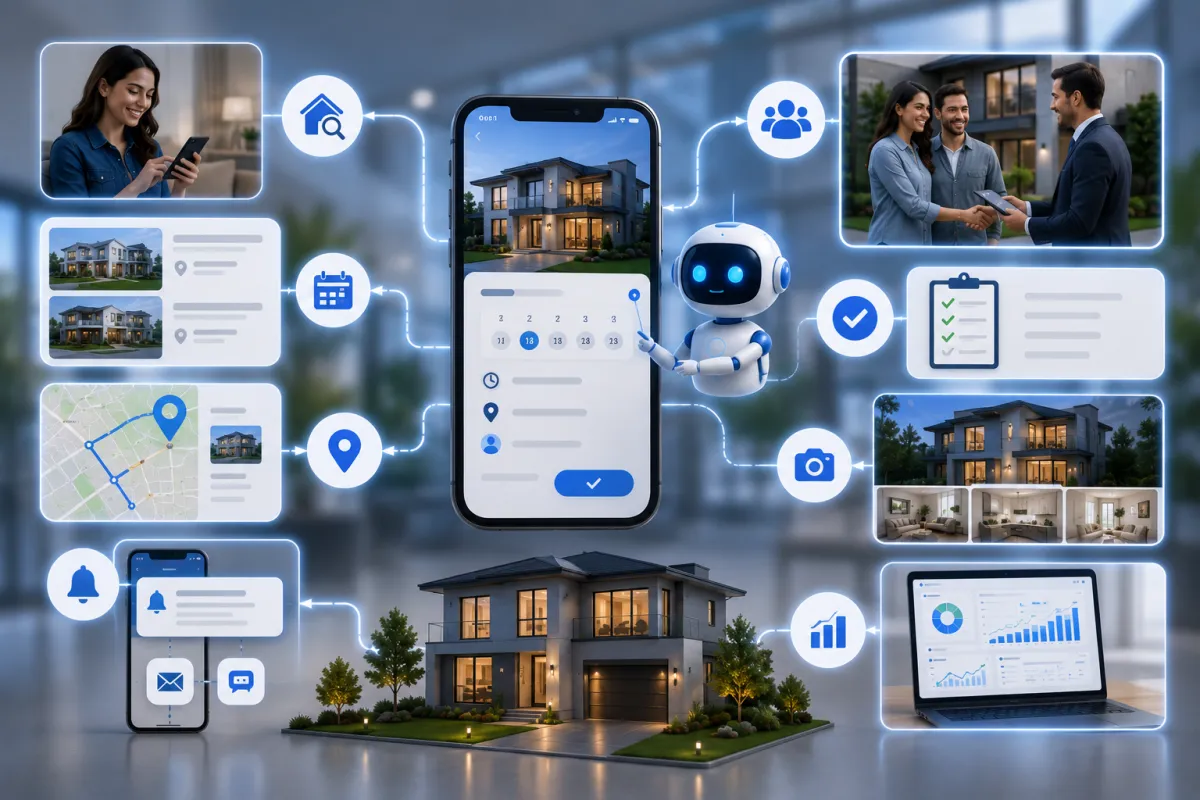
Automation
What is Real Estate Site Visit Automation?
Discover what real estate site visit automation is. Learn to book tours instantly, reduce buyer no-shows, and close more property deals.
June 19, 2026
11 min read

In real estate, site visits are where serious buyers become customers. But getting a lead from an enquiry to an actual property visit often involves endless calls, follow-ups, and scheduling hassles.
Real estate site visit automation removes this manual work. Using software and AI, it automatically handles visit bookings, reminders, follow-ups, and coordination. This helps sales teams spend less time managing schedules and more time engaging buyers and closing deals.
In this guide, we'll explain what real estate site visit automation is, how it works, and why developers, brokers, and agencies are using it to increase site visits and improve conversions.
A Simple Definition
Real estate site visit automation is the use of automated workflows to capture interest, qualify a lead, schedule a visit, send reminders, route the buyer to the right salesperson, and follow up afterward, all with little or no manual effort.
Instead of an agent personally texting back and forth to find a time, an automated system does the heavy lifting. It can answer instantly, ask the right questions, offer available slots, confirm the booking, and nudge the buyer before the appointment. A human steps in at the moments that matter most, like the actual conversation with a serious, qualified buyer.
Why Does the Site Visit Stage Leak So Many Leads
Most real estate businesses spend heavily to generate leads through Google, Meta, and portal listings. The problem is rarely a shortage of inquiries. The problem is what happens next.
Speed is the first issue. A buyer who fills out a form expects a fast response. If your reply comes hours later, they have often moved on to another project. Manual teams simply cannot respond instantly to every lead, especially after office hours or during a busy launch.
Qualification is the second issue. Not every inquiry is worth a sales visit. Some buyers have the wrong budget, the wrong location, or no real intent. Without a way to filter, agents waste time on visits that were never going to convert.
No-shows are the third issue. Even after a visit is booked, a large share of buyers do not turn up. Life gets in the way, and without a reminder, the appointment quietly disappears. Each no-show is wasted sales capacity and a lost opportunity.
Site visit automation is designed to plug all three leaks at once.
How Real Estate Site Visit Automation Works
A well-built automation follows the buyer through the whole journey. Here is what that flow usually looks like.
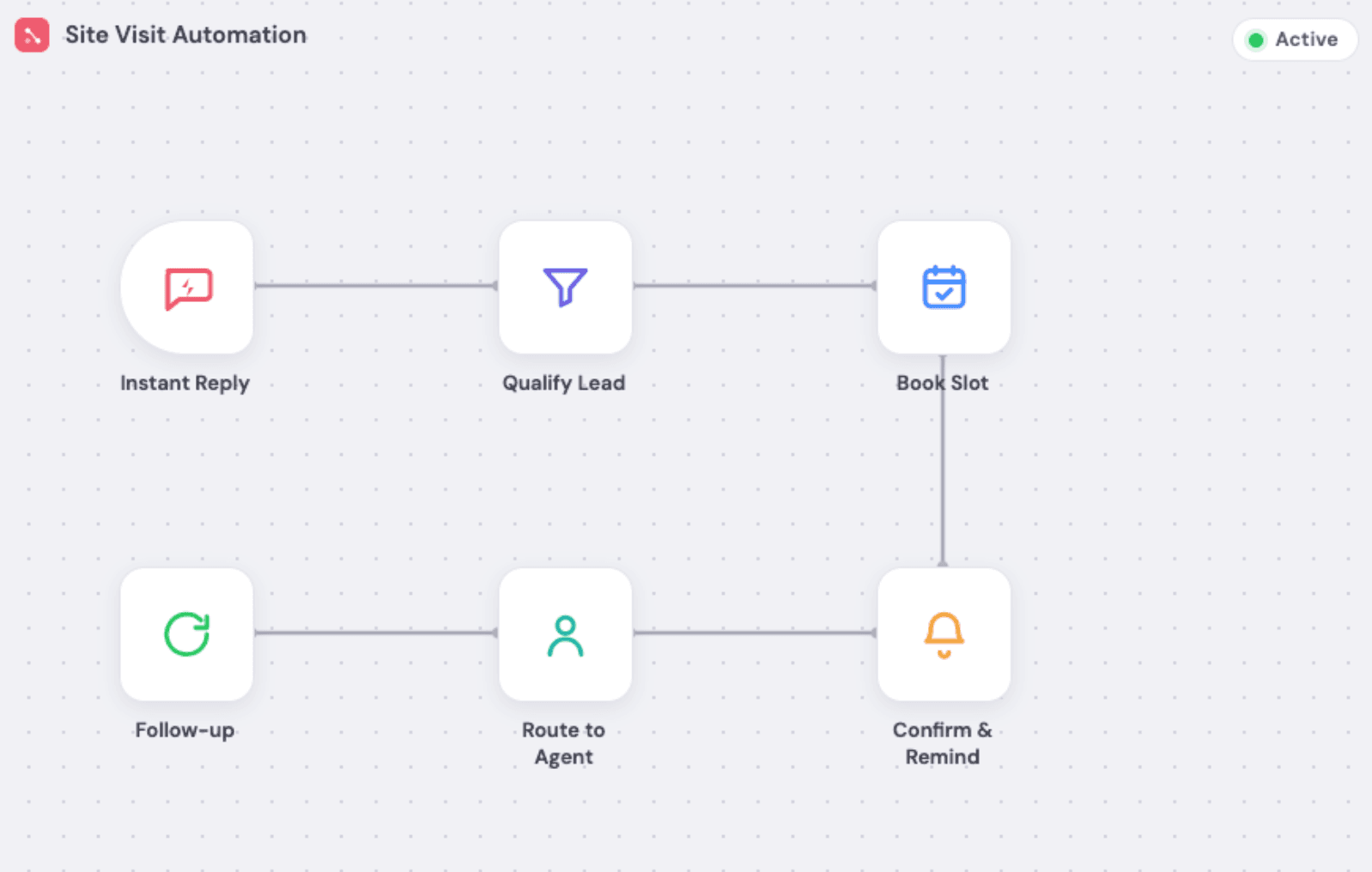
Instant capture and response. The moment a lead comes in from an ad, landing page, or WhatsApp click, the system replies within seconds. It greets the buyer, confirms the project they are interested in, and starts the conversation while their interest is still high.
Smart qualification. The system asks a few simple questions to understand budget, preferred location, configuration, and timeline. This sorts serious buyers from casual browsers without an agent lifting a finger. High-intent leads move forward, and weaker ones are nurtured or set aside.
Self-service scheduling. Qualified buyers are offered available time slots and can pick one that suits them. The booking is confirmed instantly and added to the right calendar. There is no back and forth, and no buyer left waiting for a callback that never comes.
Confirmations and reminders. Once a slot is booked, the system sends a confirmation with the address, directions, and a contact name. It then sends reminders before the visit, which is the single most effective way to cut no-shows. If a buyer needs to reschedule, they can do it in a tap.
Routing and handoff. The right salesperson is notified with full context about the buyer, including their answers from the qualification step. The agent walks into the visit already knowing what the buyer wants, which makes the conversation sharper and more useful.
Post-visit follow-up. After the visit, the system can collect feedback, send relevant documents, and trigger a nurture sequence for buyers who need more time. Warm leads stay warm instead of going cold while the team moves on to the next inquiry.
What You Can Automate
You do not have to automate everything at once. Most businesses start with the steps that hurt the most and expand from there. Common candidates include:
- First response to new leads, day or night
- Lead qualification questions and scoring
- Slot booking and calendar management
- Visit confirmations with location and directions
- Reminder messages before the appointment
- Rescheduling and cancellation handling
- No-show follow-up and rebooking
- Internal alerts and lead assignment to agents
- Post-visit feedback and document sharing
- Nurture sequences for buyers who are not ready yet
The Benefits for Your Business
The most immediate win is fewer no-shows. Reminders and easy rescheduling mean more booked visits actually happen, which directly lifts your conversion from lead to visit to booking.
The second win is a faster response. Buyers hear back in seconds, not hours, so you capture intent at its peak instead of losing it to a competitor.
The third win is a more focused sales team. When real estate automation handles scheduling and filtering, agents spend their hours with qualified buyers rather than on administrative tasks. That improves both morale and output.
The fourth win is better data. Every step is tracked, so you can finally see your true cost per qualified visit, your no-show rate, and which campaigns produce buyers who actually show up. That clarity helps you spend your marketing budget where it works.
What Good Automation Looks Like
Automation is not about removing the human touch. In real estate, the relationship still matters, and buyers making a major purchase want to feel looked after.
The goal is to automate the repetitive, low-value tasks and protect the human moments. A buyer should never feel stuck talking to a robot when they have a real question. The best systems know when to hand off to a person, keep the tone warm and natural, and make the buyer feel guided rather than processed. Done well, automation makes your team look more responsive and more organized, not less personal.
Getting Started
You do not need to rebuild your entire sales process to benefit. The smartest approach is to map your current buyer journey, find the points where leads go cold or visits fall through, and automate those first. From there, you can connect your ads, your CRM, and your messaging channels into one smooth flow.
This is where Flowlyn comes in. We design and build AI automation that fits the way your sales team already works, from instant lead response to qualification, booking, reminders, and follow-up. The result is more qualified site visits, fewer no-shows, and a team free to focus on what they do best, which is helping buyers say yes.
If you are losing leads between the inquiry and the visit, that gap is costing you bookings every month. Site visit automation is one of the fastest ways to close it.

About Divyesh Savaliya
Divyesh leads Flowlyn with 12+ years of experience designing AI-driven automation systems for global teams.
In This Article


![Real Estate Chatbot - Benefits & Use Cases [Examples]](/_next/image?url=%2Fimages%2Fblog%2Freal-estate-chatbot%2Freal-estate-chatbot-benefix-use-cases.webp&w=3840&q=75)