Back to Blog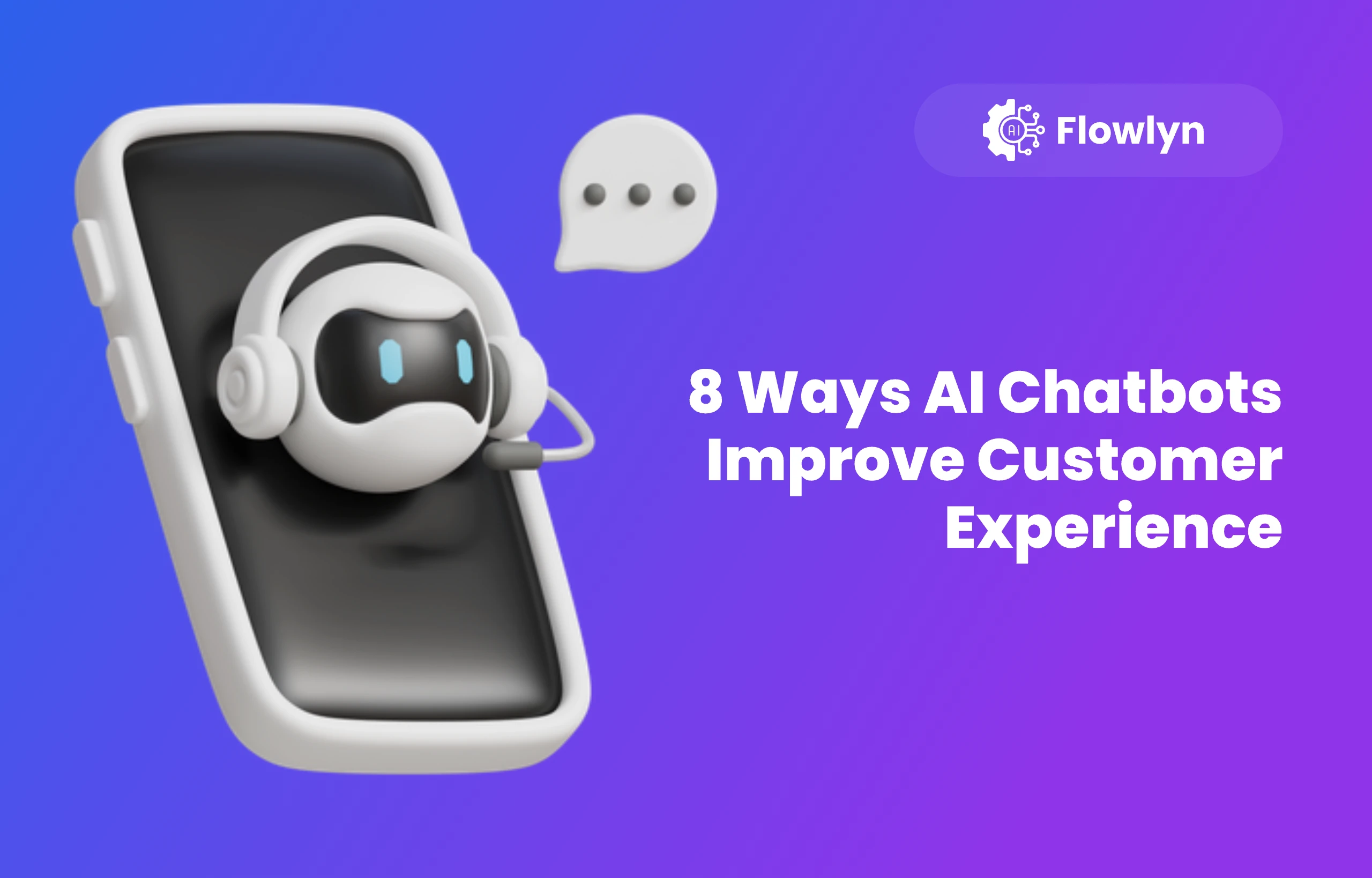
AI Technology
8 Ways AI Chatbots Improve Customer Experience
Unlock better CX! Learn ways to use AI chatbots improve customer service, speed, and overall satisfaction.
November 15, 2025
6 min read

In the hyper-competitive digital landscape, Customer Experience (CX) has become the new battleground for brand loyalty and growth. This is where AI chatbots transition from helpful tools into critical infrastructure for modern business.
The AI chatbots are intelligent conversational interfaces capable of managing complex tasks, analyzing sentiment, and operating across all customer touchpoints.
To truly understand their impact, here are 10 extensive ways AI chatbots are fundamentally improving and scaling superior customer experience.
Ways to Leverage AI Chabot for Improving Customer Experience
These three elements form the bedrock of basic customer satisfaction, and AI chatbots are uniquely positioned to maximize them.
1. Instant, Global, 24/7 Availability
Your customers live in different time zones, and they don't stop needing help at 5:00 PM. Waiting for "business hours" creates friction and anxiety.
AI chatbots solve this problem by managing thousands of conversations simultaneously, meaning your customers face zero queue times. AI provides truly global, non-stop support, ensuring a uniform standard of service whether the customer is in Tokyo or New York, at 2 PM or 2 AM.
Get Your Free Automation Assessment
Discover how much time and money you can save with custom automation solutions. Our experts will analyze your processes and provide a detailed roadmap.
Get Free Assessment2. Delivering Unwavering Consistency and Accuracy
Human agents, however skilled, can be prone to human error, varying moods, or inconsistent adherence to scripts.
Chatbots pull information directly from the established, validated knowledge base, ensuring every answer is accurate and up-to-date. This reliability reduces the need for costly follow-up contacts and dramatically improves customer trust by eliminating misinformation.
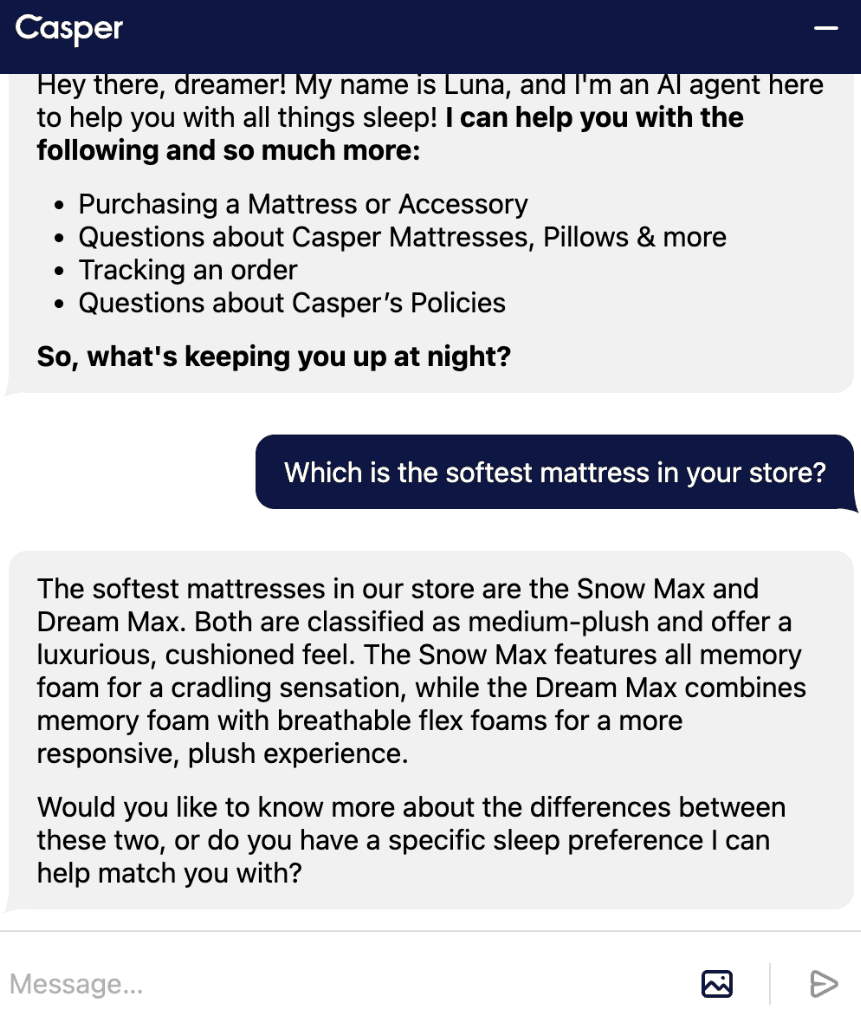
The AI chatbot can do all this while maintaining a consistent tone, language, and communication style across every interaction, reinforcing the brand's identity. The difference between a transactional bot and a conversational AI lies in its ability to use context and data to feel truly personal and intelligent.
3. Deep Personalization via CRM Integration
A truly intelligent chatbot is not isolated; it is a critical piece of the data ecosystem. By integrating with Customer Relationship Management platforms, Enterprise Resource Planning (ERP) systems, and user profiles, the bot gains the memory required for sophisticated personalization.
Here is what the AI chatbot can do:
- Greet a returning customer by name, instantly recall their last purchase, or the ticket they opened last week.
- Based on browsing behavior, past purchase patterns, or explicit stated preferences, the chatbot can act as a consultative sales agent much like conversational AI for lead generation.
- Analyze historical data to predict what the customer might need next (e.g., suggesting a refill purchase based on past usage cycles)
4. Advanced Sentiment Analysis and Triage
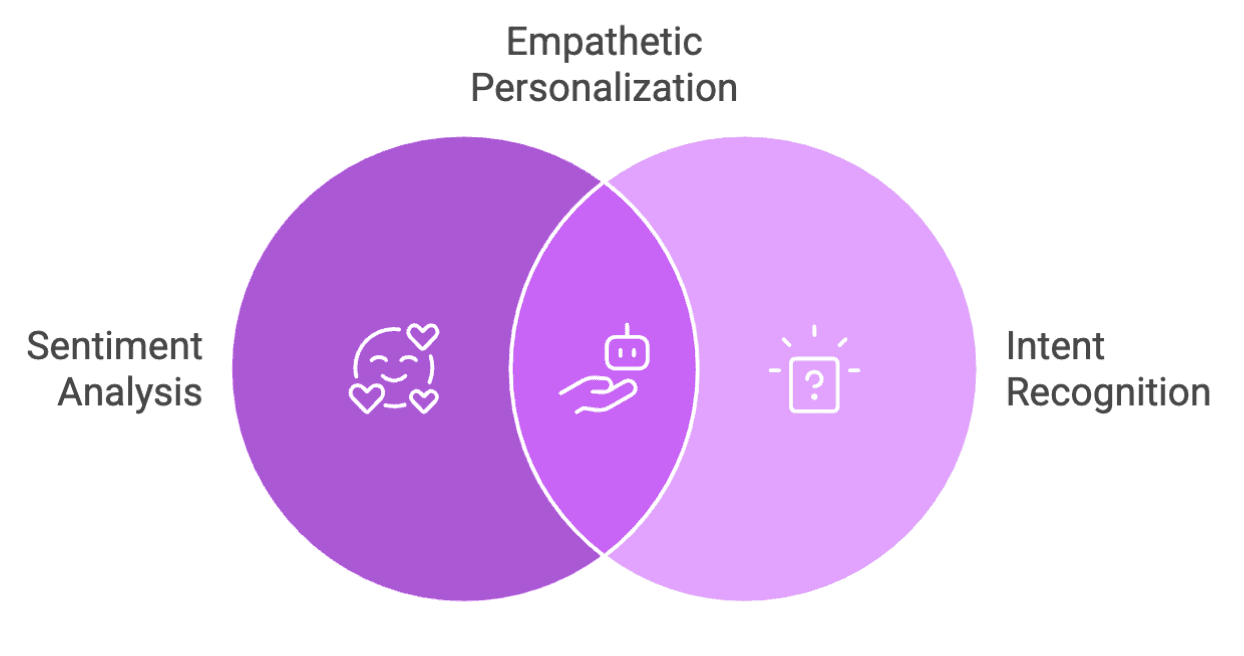
Modern AI chatbots use sophisticated Natural Language Understanding (NLU)—a subset of NLP to go beyond recognizing keywords; they analyze the emotion behind the text.
For example, if a customer uses language indicating high frustration or anger, the AI can immediately flag the conversation as critical and facilitate an instant human handoff.
This preemptive action prevents negative customer experience from escalating into public complaints or churn. The chatbot highly focuses on sentiments and intent.
5. Seamless Omnichannel and Multi-Platform Experience
Customers move fluidly between channels from a mobile app to a website to social media platforms. The chatbot must maintain context across these touchpoints.
Chatbots allow businesses to efficiently manage high-volume channels like WhatsApp and Telegram, which often lack the necessary human staffing resources, making these customer-preferred channels viable for large-scale support. For high-volume email support, consider deploying a dedicated AI email assistant.
Meanwhile, the AI maintains a full, continuous conversation history. This reduces customer effort and ensures no time is wasted catching up.
6. Empowering Self-Service and Deflection
Most customers prefer solving problems themselves if the tools are easy and intuitive. Chatbots are the perfect gateway to efficient, high-fidelity self-service.
Instead of forcing the customer to search a dense FAQ page, the chatbot converts the customer's natural language question into a precise query for the knowledge base, instantly delivering the relevant answer, link, or help article directly into the chat window.
Additionally, the customer can:
- Checking shipping status
- Processing a password reset
- Updating a billing address
- Claim return/warranty
7. Uncovering Deep Customer Insights
Every single conversational turn is valuable, unstructured data. AI systems meticulously collect and categorize this data to reveal foundational truths about the customer base's needs and pain points.
Analyzing thousands of conversations, the AI can pinpoint recurring themes, such as high volumes of questions about a specific feature or frequent complaints about a particular stage in the checkout process.
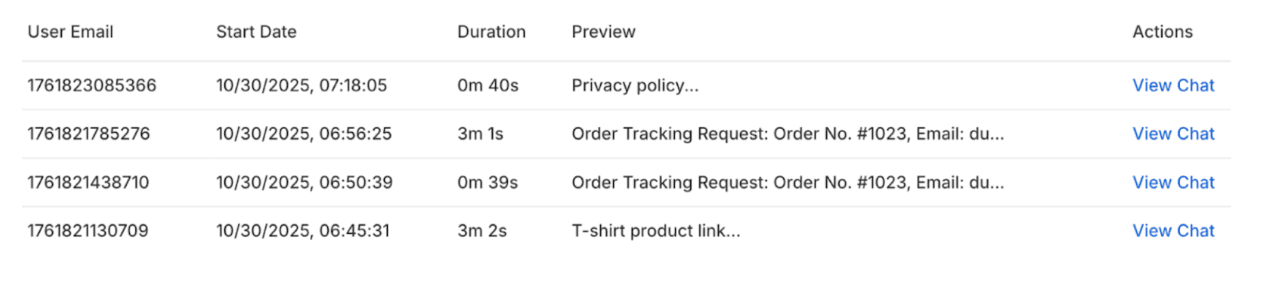
This data provides actionable, real-time feedback for product development and operational improvements. If the company's knowledge base cannot answer, highlight clear areas where content or product/service offerings need to be expanded.
8. Rapid Scalability for Peak Periods
Business demand is rarely linear. During holiday sales, product launches, or seasonal peaks, support volume can surge by factors of 10 or more, often crippling unprepared human teams.
Chatbots provide instant and virtually unlimited scalability. A business can handle an enormous, unexpected influx of inquiries without the costly and time-consuming process of hiring and training temporary staff, ensuring CX quality does not plummet during the busiest times.
If you are looking to expand into new markets or languages, a trained AI chatbot can be deployed significantly faster and more economically than building out a new, multilingual human support team, accelerating market entry while maintaining high service standards.
Get Started with Smart AI Chatbots
Deploying an AI chatbot capable of 24/7 global availability, deep CRM personalization, and intelligent sentiment-based triage requires more than an off-the-shelf solution; it requires expert integration and strategic design.
Flowlyn specializes in designing and deploying these high-impact AI chatbot solutions. Our custom-engineered AI Chatbots integrate seamlessly with your existing data systems to start solving complex customer problems, increasing your deflection rate, and freeing your human agents to focus on high-value interactions—immediately improving your Customer Experience.
Book a Free Strategy Call
Talk to our automation experts about your specific challenges. We'll share proven strategies that have helped 500+ businesses save 40-70% on operations.
Book Free Call
About Divyesh Savaliya
Divyesh leads Flowlyn with 12+ years of experience designing AI-driven automation systems for global teams.
In This Article